

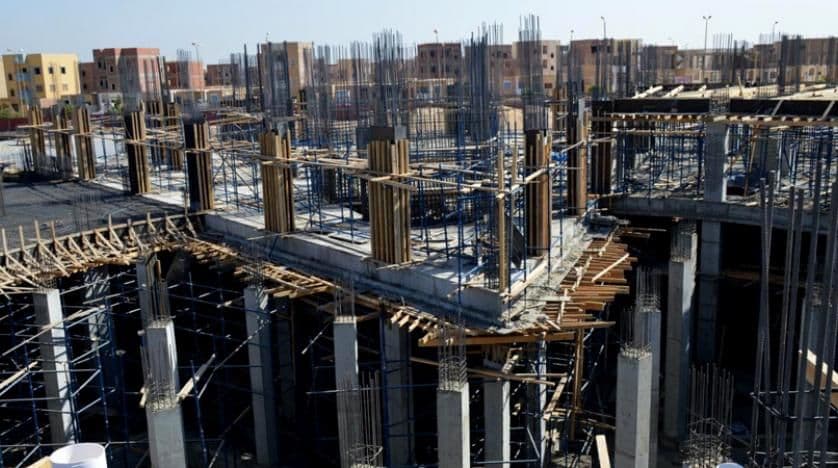
Why Is 2026 a Decisive Year for the Egyptian Real Estate Market?
The Egyptian real estate market has undergone profound transformations over the past few years. However, 2026 stands out as a decisive milestone—not merely as a new calendar year, but as a turning point following a period of rapid economic shifts that reshaped the entire property landscape.
Rising inflation, fluctuating exchange rates, and changing interest-rate policies have made buying or investing in real estate more complex than ever. As the year begins, investors and home seekers are asking critical questions:
Will property prices continue their upward trend?
Is the market entering a phase of stability or selective price corrections?
Does 2026 represent a real opportunity—or a risk that requires careful calculation?
These questions are no longer limited to new investors. Existing property owners and market professionals are also closely monitoring Egypt’s real estate market in 2026, trying to understand whether the rules of the past still apply or if a new reality has emerged.
This analytical article offers a realistic, data-driven assessment—not exaggerated promises or random predictions. By comparing 2025 with the outlook for 2026, we analyze pricing trends, market drivers, and likely scenarios to help you answer one key question:
Where do you stand today, and where should you position yourself next?
If you are considering buying, investing, or even waiting, this guide is designed to give you a complete and balanced picture before making your decision.
1. A Snapshot of the Egyptian Real Estate Market in 2025
Understanding 2026 requires first revisiting 2025, which laid the groundwork for the current market. The year was not defined solely by price hikes; it clearly demonstrated that Egyptian real estate follows economic fundamentals rather than random movements.
Key Market Indicators in 2025
Average residential price growth: 18%–25% annually, with higher growth in developing areas compared to fully serviced districts.
Construction costs: Increased by more than 30% year-on-year due to higher prices of steel, cement, and energy—directly impacting unit prices.
Purchasing power: Declined under inflationary pressure, yet real housing demand remained strong, especially for end-users rather than speculators.
Real estate as a value hedge: Many individuals shifted savings from cash to property to preserve value.
As a result, 2025 maintained stable demand but placed pressure on both sides of the market: developers faced rising costs, while buyers encountered higher prices and more complex financing structures.
2. The Egyptian Real Estate Market in 2026: What Has Changed?
Rather than a sudden shock, 2026 marks a phase of market rebalancing. Price movements are now more closely linked to real demand and purchasing power—not inflation alone.
a. Property Price Trends in 2026
The market remains on an upward path, but at a slower and more rational pace:
Expected price increases range between 10% and 15% across most residential areas.
New or near-completion projects with operational infrastructure may record slightly higher growth.
Overpriced or low-value projects could experience partial price corrections.
Key insight: Growth continues, but the market has matured. Buyers are more informed, comparisons are sharper, and value matters more than ever.
b. Price Outlook Drivers
Price trends in 2026 are shaped by several economic factors:
Interest rates: Any gradual cuts could release postponed demand, especially among first-time buyers.
Construction costs: Still high, creating a natural price floor and limiting downside risk.
Supply vs. demand: In many areas, real demand still exceeds ready-to-deliver supply.
Inflation and currency movements: Real estate remains a reliable hedge against depreciation.
Most likely scenario: Controlled, moderate growth with no widespread price decline—except in isolated, project-specific cases.
3. 2025 vs. 2026: A Clear Market Shift
In 2025, rapid price increases—sometimes reaching 25% annually—made purchasing challenging. Demand was often driven by fear of missing out rather than genuine housing or investment needs. Rising construction costs pushed some developers to raise prices aggressively, occasionally at the expense of quality.
By contrast, 2026 reflects a more mature market:
Price growth has moderated to 10%–15%.
Demand is more stable and needs-based.
Construction cost pressures have eased, enabling better-quality delivery.
Buyers now have the ability to compare, negotiate, and plan rationally.
For investors, this means safer long-term positioning, more stable rental yields, and fewer emotional decisions.
Why 2026 Is Better Than 2025
Demand is driven by real needs, not speculation.
Buyers enjoy wider choices and better project quality.
Long-term investment risk is lower, with more predictable returns.
In short, 2026 is not a continuation of 2025—it is a more balanced and transparent market.
4. Short-, Medium-, and Long-Term Outlook
Short term (2026): Relative price stability with slower growth; cautious but genuine demand continues.
Medium term (2026–2028): Gradual growth supported by urban expansion, population growth, and improved financing options.
Long term: Egyptian real estate remains one of the safest assets for preserving and growing wealth over time.
5. Is 2026 the Right Time to Buy?
For End-Users
Yes. Prices reflect real costs rather than speculation.
Waiting often means higher prices later.
Housing decisions are less sensitive to market timing.
For Investors
Yes—but selectively:
Choose locations with proven demand.
Focus on flexible payment plans.
Evaluate rental yield, not just capital appreciation.
Bottom line: 2026 favors analytical buyers—not fear-driven decisions.
6. Best Investment Areas in Egypt in 2026
New Cairo: Strong demand, active resale market, real population density.
New Administrative Capital: Long-term growth potential, especially near government and service hubs.
Sheikh Zayed & extensions: Price stability, lifestyle appeal, strong rental demand.
Operational coastal cities: Areas with real rental and tourism demand—not just sales-driven hype.
Location selection is as critical as choosing the right unit.
7. Real Estate vs. Gold vs. USD
Real Estate: Fixed asset, income-generating, long-term value preservation.
Gold: Strong store of value but no income.
USD: Short-term hedge, non-productive over time.
Conclusion: Real estate offers the best balance between safety and returns.
8. Will Prices Fall in 2026?
Current indicators suggest:
No support for a general market-wide decline.
Construction costs create a solid price floor.
Selective opportunities may arise due to developer-specific factors.
A major drop is unlikely, but smart buyers can still find value.
9. Practical Advice for 2026 Buyers and Investors
Avoid fear-based purchases.
Compare at least three projects.
Calculate rental yields realistically.
Choose developers with strong delivery records.
Think long term.
Final Conclusion: Where Are Prices Headed?
Egypt’s real estate market in 2026 is moving toward:
Logical, sustainable growth.
Real opportunities for informed buyers.
Continued strength as an inflation-resistant asset.
Those waiting for a major price drop may miss the market entirely. In 2026, success depends on awareness, analysis, and smart selection—not timing alone.
Smart buyers act early, compare carefully, and invest with